
Commons Gaps Towards Neuroinclusion in the Workplace
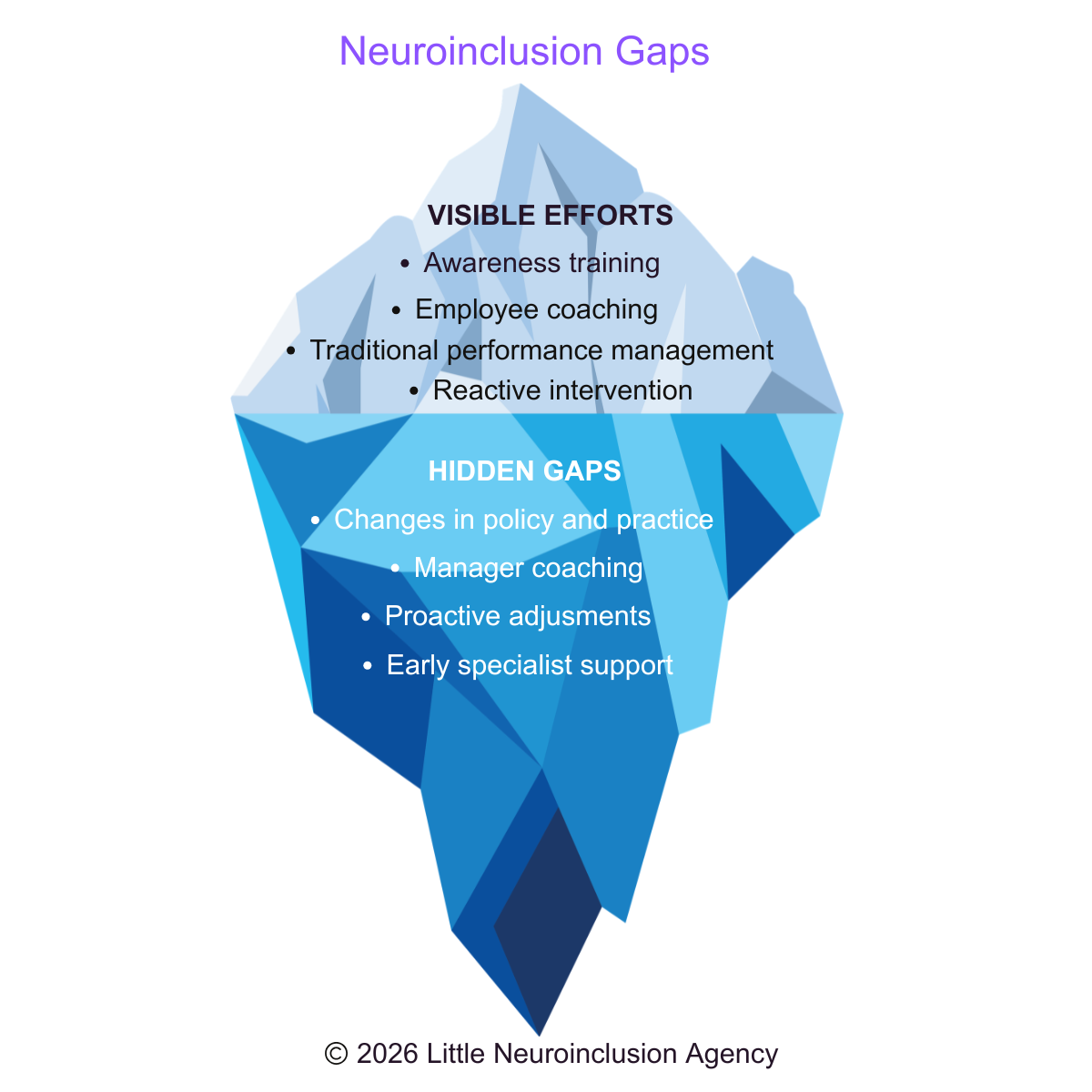
Many organisations make meaningful commitments to diversity, equity and inclusion, expanding their focus to include neuroinclusion. We regularly see organisations investing in neurodiversity awareness training and employee coaching, but quite often, the activity stops there.
Through our coaching, training and advisory work, we see consistent patterns emerge, even in organisations that are making positive progress towards neuroinclusion. The gaps are often about lack of intention, caused by uncertainty around where effort will have the most impact beyond initial initiatives.
In our blog, we discuss the most common neuroinclusion gaps we see, and what they mean for leaders seeking to move from awareness to impact.
Six Senior Leadership Behaviours That Shape Inclusive Culture
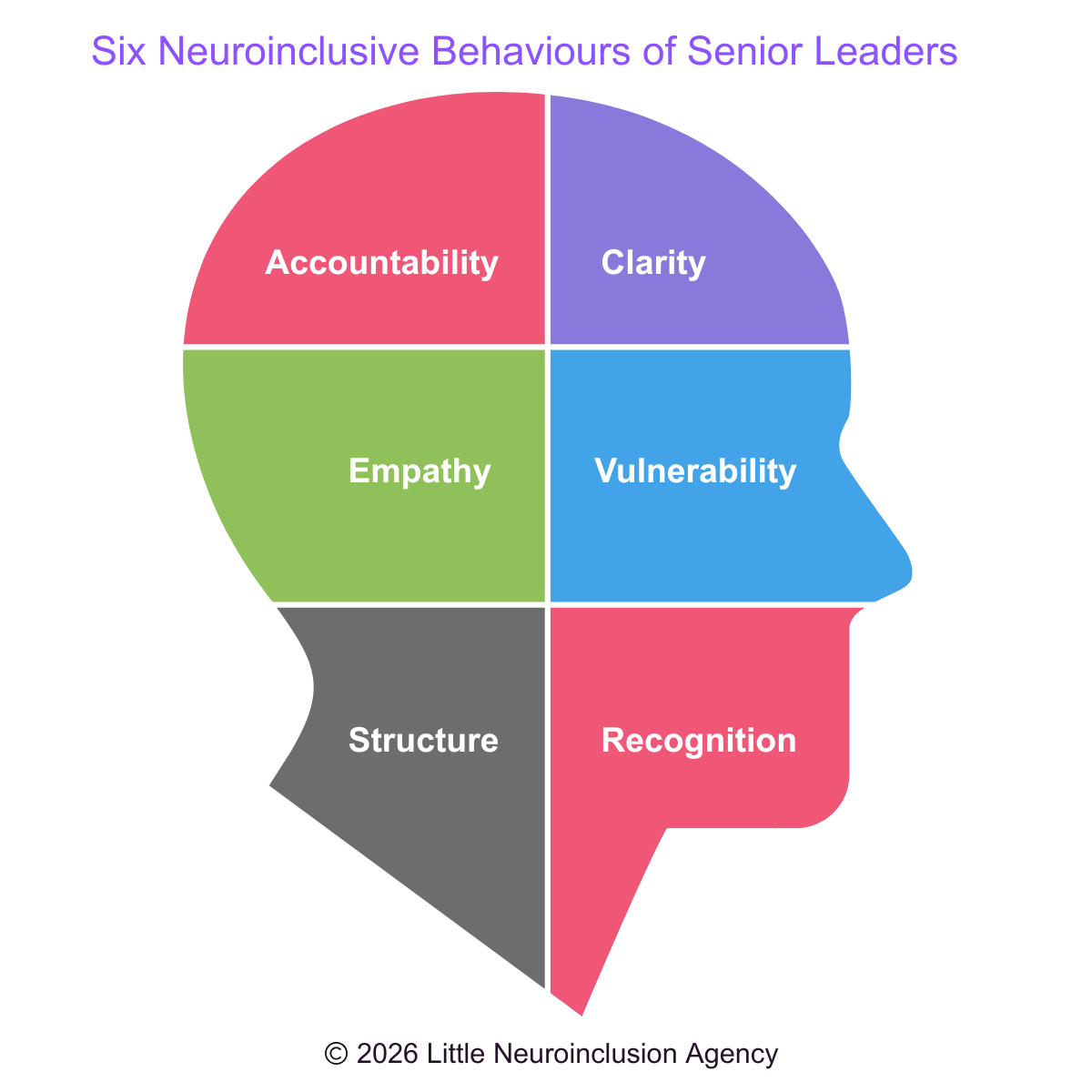
Senior leaders shape neuroinclusive culture through six core behaviours: accountability, clarity, empathy, vulnerability, structure and recognition. When these behaviours are practised with intention, they create workplaces where neurodivergent people, and all employees, feel respected, supported and able to thrive.
Neurodiversity Inclusion at Work: Stop the Guesswork. Start working better together.
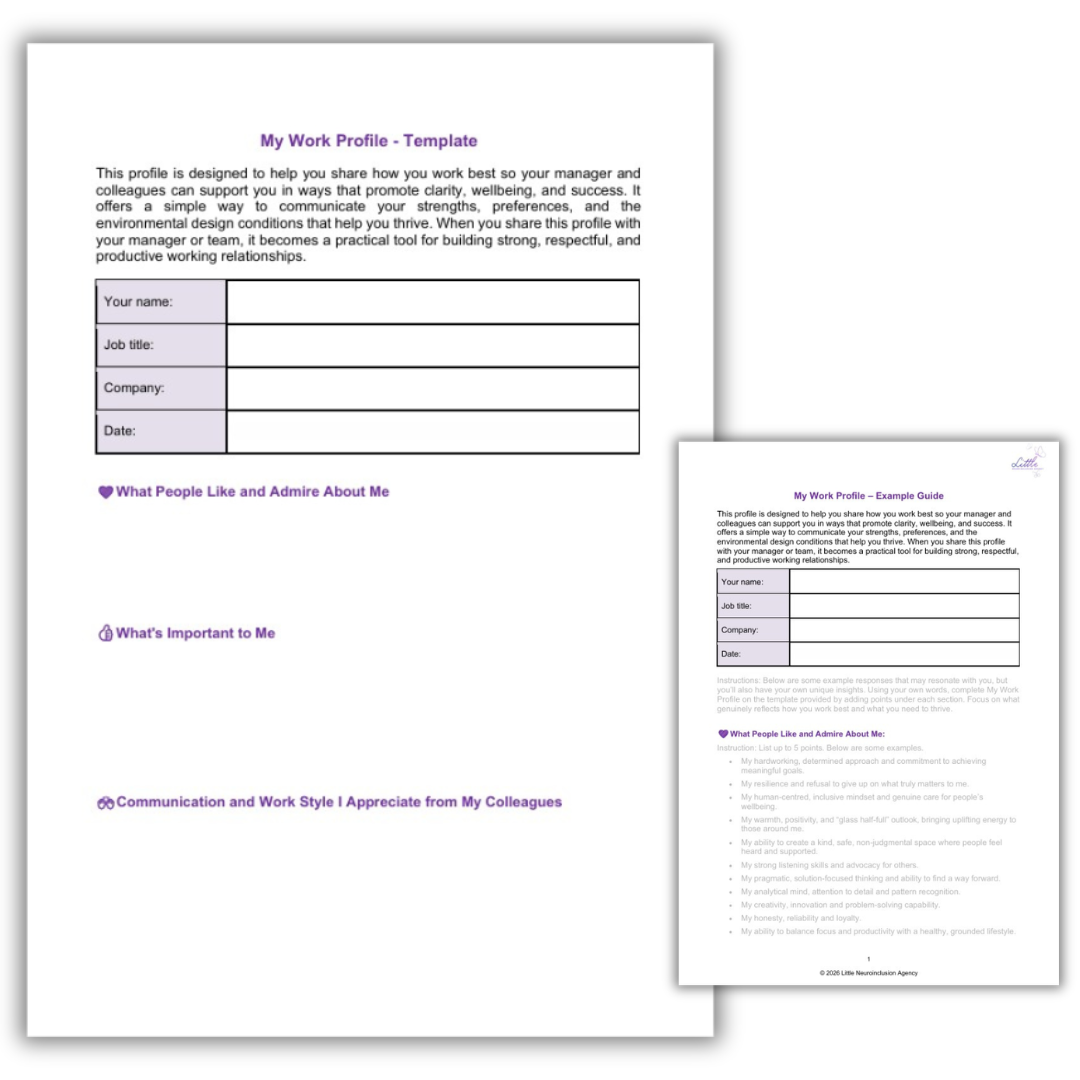
My Work Profile is a practical, self-guided neuroinclusive tool designed to help every employee clearly identify and articulate how they work best, so managers and teams can support them with confidence, not guesswork.
Workplaces are full of capable, well‑intentioned professionals who still find themselves misaligned, frustrated, or exhausted. More often than not, the issue isn’t performance or motivation, but a lack of shared understanding around how people work.
We expect employees to collaborate, communicate clearly, and perform well, and yet we rarely give them a safe, structured way to explain what they need to do their best work. Instead, we work with each other based on assumptions, unspoken rules, and guesswork.
Through years of neuroinclusive coaching and consultancy work, one thing has become clear: when people don't have to guess how to work together, trust and psychological safety naturally grow.
When people don’t have to guess how to work together, trust and psychological safety grow.

Neurodiversity Executive Coaching: Strengthening Your Capacity to Lead a Neurodiverse Team
What are the four areas we work on with executive leaders?
Building Neuroinclusive Leadership Capability: building not just understanding, but strategic capability.
Navigating Complex People Challenges: developing the confidence to focus on people's needs with clarity and safety.
Leading Through Organisational Change: leading through challenging changes with surety and confidence.
Strengthening Leadership Identity and Confidence: building resilience through vulnerability and self-development.
Neuroinclusion and Psychological Safety at Work: Key Takeaways from our Neurodiversity Celebration Week Webinar
What does psychological safety really mean for neurodivergent employees? And what does it actually look like in practice, inside real workplaces, with real people?
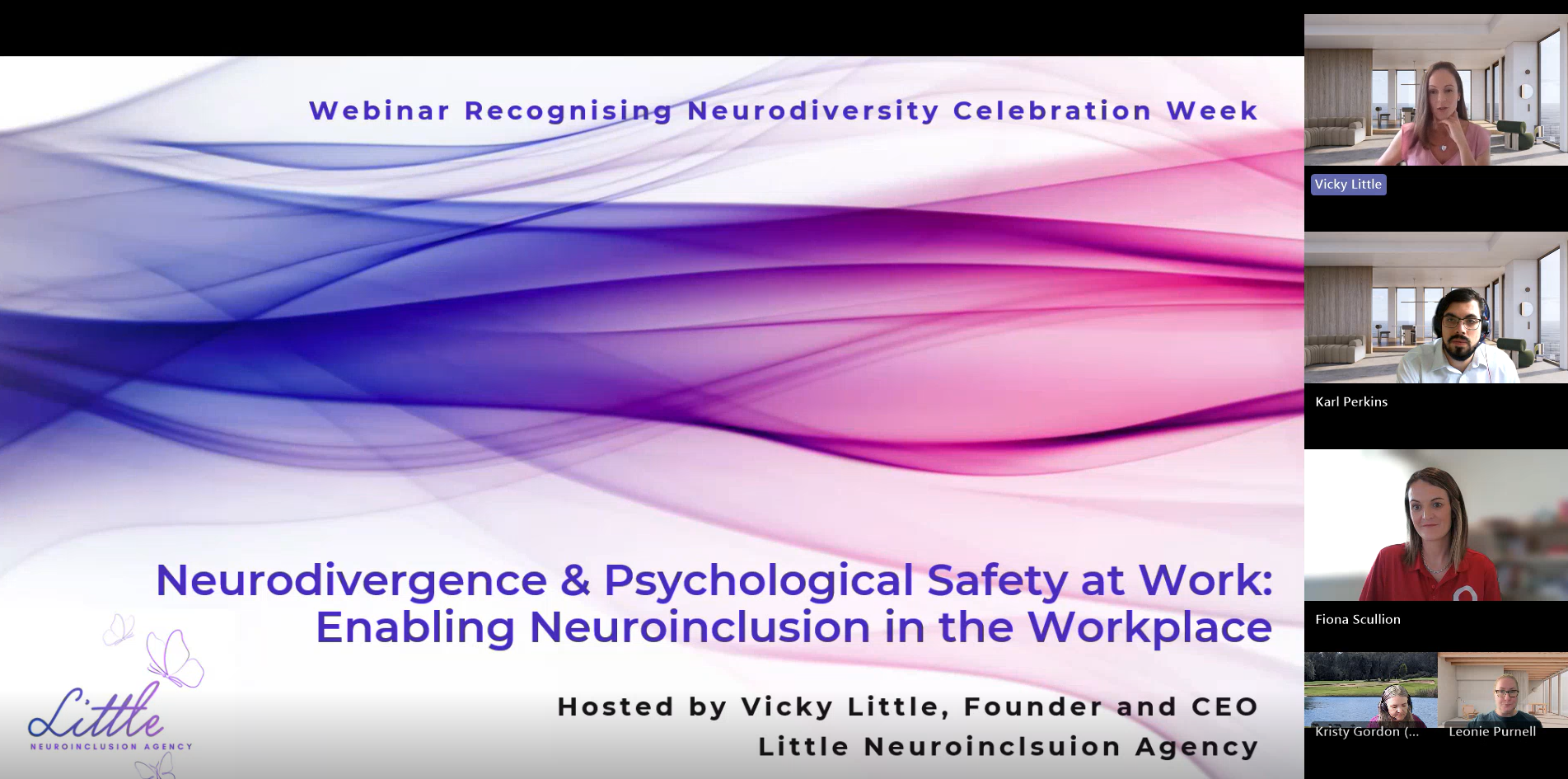
These were the questions at the heart of our Neurodiversity Celebration Week webinar, Neurodivergence and Psychological Safety at Work: Enabling Neuroinclusion in the Workplace. We brought together a global audience of people leaders, People and Culture professionals, advocates and neurodivergent individuals to explore what meaningful neuroinclusion looks like, beyond the buzzwords, beyond the awareness days, and into the everyday actions that create genuine change.
We were honoured to be joined by two incredible panelists: Karl Perkins, a policy officer and autistic professional with lived experience at the centre of everything he contributes, and Fiona Scullion, Culture and Inclusion Specialist at Coles Group, who leads the accessibility portfolio as part of their Culture and Inclusion team. Our Founder and CEO, Vicky Little, also brought her own perspective, both as a 20-year practitioner in this space and as someone with lived experience of late-diagnosed ADHD.

Psychological Safety and Neuroinclusion in the Workplace: Unlocking Insights
Psychological safety is the heartbeat of an inclusive workplace. It is the difference between employees who feel they must mask their differences to stay safe, and employees who feel confident to contribute their ideas, ask for support, and work in ways that align with their strengths. For all employees, and especially neurodivergent employees, psychological safety is not just beneficial, it’s essential.
At Little Neuroinclusion Agency, we see this every day in our work with organisations across all sectors. When psychological safety is strong, employees thrive. When it is weak, even the most talented individuals can become overwhelmed, disengaged, or burnt out. And while psychological safety is often spoken about in broad terms, its real impact is felt through three interconnected areas:
People Leaders
Workplace Environment
Job Design.
This article explores each of these critical areas in depth, offering practical insights and actions for leaders who want to build workplaces where every mind can excel.